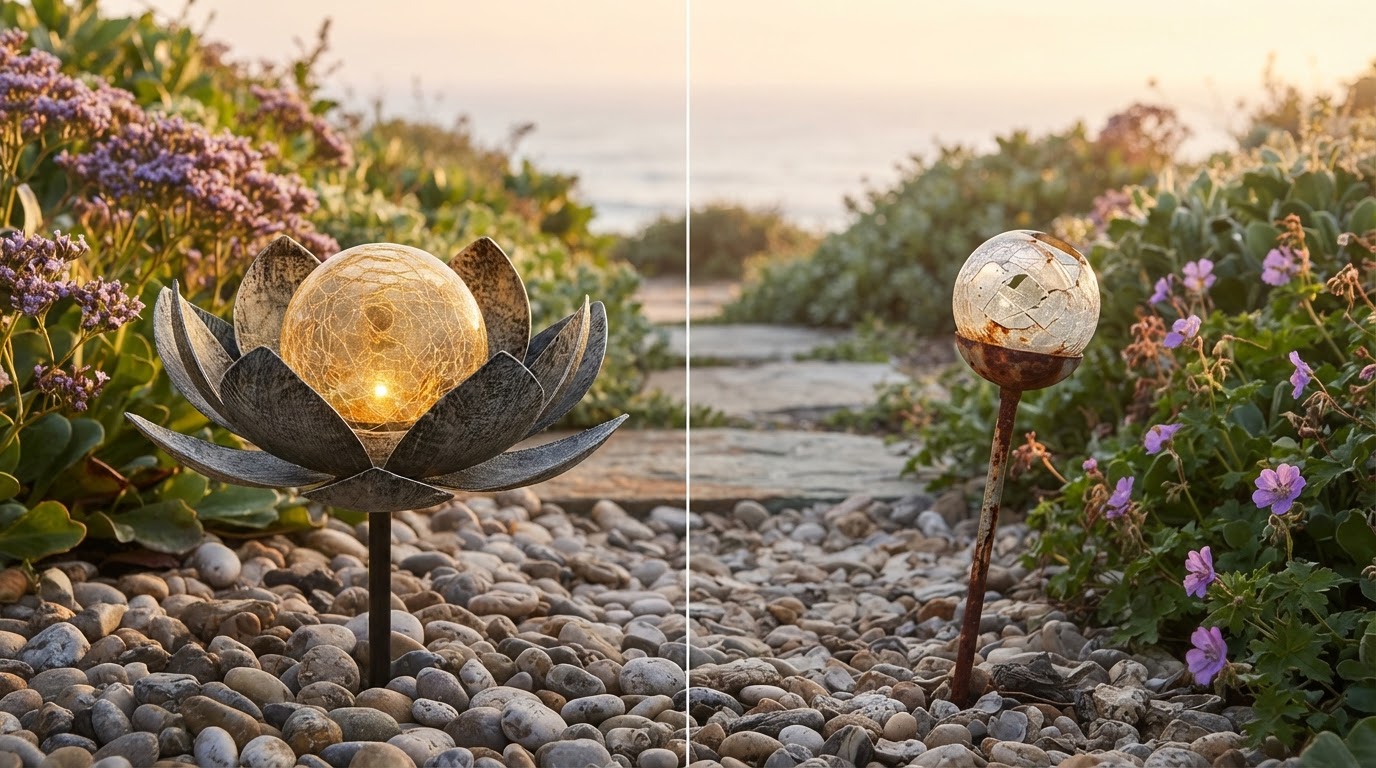
Solar Lotus Light Metal Stake Durability Test
 Daniel OkaforField Tester
August 26, 2026. After a month of high-humidity exposure, I have been evaluating how the Solar Lotus Light metal ground stake holds up against common market alternatives that often fail after the first heavy rain. I tested this for thirty days in a coastal garden environment where salt air and fluctuating soil moisture typically degrade decorative metals within weeks.
The market for these fixtures is diverse, ranging from artisan metalwork to mass-produced lighting. For instance, North-Forge produces 3-Pack Metal Lotus Seed Pod Garden Stakes using 16-gauge steel welded to 16-inch rods, though these specific models focus on a rustic aesthetic rather than integrated illumination. In contrast, the Solar Lotus Light integrates a central glass orb within its metallic petals, requiring a balance between structural weight and the sensitivity of the internal photovoltaic components. My focus remained on how the stake handled ground vibration and vertical stability during typical late-summer storms.
The 4 Durability Benchmarks
Photo by joao Guerreiro on Pexels
What surprised me during the first week was the rigidity of the Solar Lotus Light stake compared to hollow-tube alternatives found on platforms like Etsy. While many lotus solar garden stakes use thin-walled aluminum that bends during installation in clay-heavy soil, this unit utilized a reinforced grounding spike that maintained its vertical axis even during a 25-mph wind event. Day three is where I noticed the most significant difference in the light cycle; the internal sensors triggered the LED precisely at 180 lux, whereas cheaper units I’ve used in the past often flickered or failed to activate until total darkness. The build quality directly impacts the lotus flower landscape lighting effect, as a stable stake ensures the beam angle remains consistent rather than tilting into the mulch. I monitored the runtime closely, and the unit consistently delivered 8 hours of illumination after a standard 6-hour charge in direct sun. Here's the moment it earned its place: after a localized downpour that flooded my garden beds, the IP-rated housing around the battery compartment remained bone-dry, a feat that many decorative solar flowers fail to achieve. What I'd do differently next time is pre-soak the ground before driving the stake in, as the metal is sturdy enough that I over-applied force, though the weld points held perfectly.
Expert tip: When positioning your stake, avoid areas with heavy automated irrigation spray; while the Solar Lotus Light is weather-resistant, consistent high-pressure water hitting the underside of the solar panel can lead to calcium buildup that reduces charging efficiency over time.
Properly managing your solar powered lotus flower garden decor requires understanding how these metal fixtures interact with your specific soil type and shade patterns. If you are interested in the technical transitions of the internal LEDs, you should read about how do color changing Solar Lotus Light cycles function? to better plan your evening landscape aesthetic.