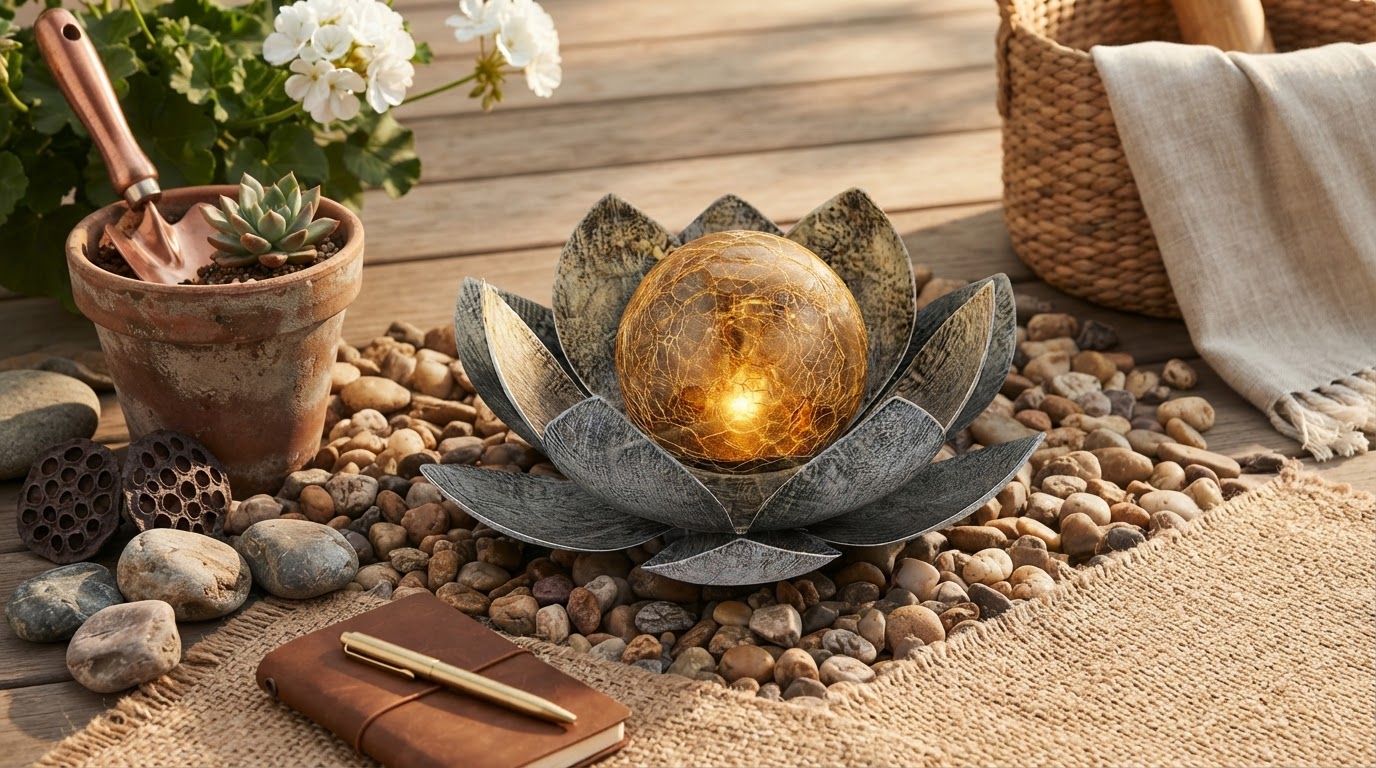
Solar Lotus Light Selection Strategy
 Maya ChenContributing Editor
October 18, 2026 — The market for decorative outdoor illumination is currently saturated with low-output LEDs, yet the Solar Lotus Light remains a persistent interest for consumers seeking to balance aesthetics with functional yard art. The conventional wisdom says that all solar garden ornaments are essentially interchangeable, but a close look at hardware specifications suggests a significant divide between floating pond variants and stationary garden stakes.
While general consumers often prioritize the visual appeal of petal design, technical durability is the only metric that matters for long-term utility. According to data from Gigalumi, high-quality decorative solar units now frequently feature a 4.8 out of 5 satisfaction rating specifically when deployed in diverse environments like flowerbeds and cemetery graves. This suggests that the utility of the Solar Lotus Light extends beyond simple backyard decoration into more demanding public and memorial spaces where maintenance is infrequent.
The 4 Technical Pillars
Run the math: a standard solar lotus fixture typically relies on a 600mAh Ni-MH battery to power its internal LED. While marketing materials often promise "all-night" illumination, the physics of a 600mAh cell dictates a hard limit on runtime based on the discharge rate of the specific LED chip used. Here’s the part nobody talks about: the efficiency of the larger solar panels found on newer models is the primary driver of performance, not the battery capacity itself. A 600mAh battery can only provide extended lighting if the panel can reach a full state of charge during daylight hours, a feat that is often impossible in shaded gardens or during Northern winters. For those integrating these into a broader solar powered lotus flower garden decor plan, placement becomes a geometric challenge rather than a stylistic choice. Furthermore, the distinction between floating and stake-mounted units is critical. Floating led lotus lights for pool use require specialized buoyancy chambers and higher IP waterproof ratings compared to their terrestrial counterparts. When selecting a solar lotus light gift for gardeners, the buyer must verify if the unit is intended for soil insertion or aquatic placement, as the cooling properties of water and the heat retention of garden soil affect battery longevity differently. The integration of crackle glass elements, as noted in recent Pinterest design trends, adds a refraction layer that can obscure the actual lumen output, making these lights better suited for ambient accenting rather than path safety. For those focused on optimizing waterproof solar lotus light performance, ensuring the panel is clear of biofilm or mineral deposits is mandatory to maintain the charging cycle.
Expert tip: Always check the milliamps (mAh) rating on the underside of the solar housing before installation; if the unit provides less than 600mAh for a multi-LED array, the light will likely fail to trigger the sensor before midnight. I'll change my mind when manufacturers start publishing standardized PAR (Photosynthetically Active Radiation) equivalent charts for solar panel efficiency in residential garden products.
Selecting the right hardware requires looking past the petal shape and into the circuitry. Proper waterproof solar lotus landscape lighting depends entirely on the seal integrity of the battery compartment.