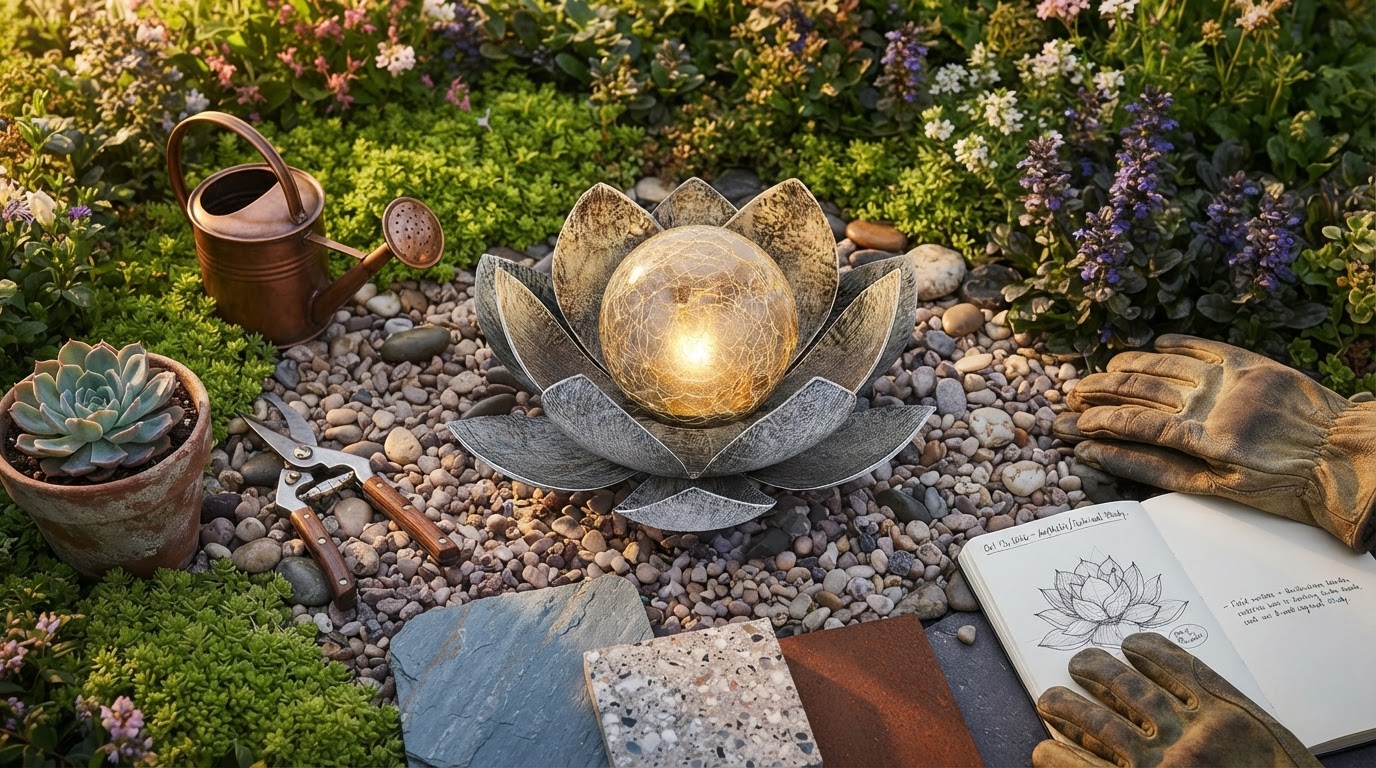
Solar Lotus Light for Metal Garden Art Design
 Maya ChenContributing Editor
October 13, 2026. This analysis examines the technical requirements and aesthetic trade-offs of integrating metal solar lotus yard art into modern landscape architecture. It is written for homeowners and designers seeking to distinguish between decorative novelties and durable outdoor lighting fixtures.
The Durability Gap in Metal Yard Art
The conventional wisdom says that any metal garden ornament will withstand the elements if it is labeled as "outdoor." However, data on environmental degradation suggests otherwise. Most consumer-grade solar decorations fail within one season due to moisture ingress or oxidation of the structural components. According to Homes & Gardens, while a metal lotus shape with a glowing center acts primarily as a piece of garden décor, the longevity of these items depends heavily on the quality of the metallic finish and the placement of the solar components. The part nobody talks about is the inherent conflict between aesthetic complexity and environmental resilience. Intricate mesh petals and bronze-finished iron, while visually striking, create numerous surface areas where water can pool and catalyze rust. This is particularly problematic for fixtures that combine glass and metal, where thermal expansion can stress the seals protecting the internal circuitry. Homeowners often prioritize the daytime appearance of a solar lotus light without considering the structural integrity required to maintain that appearance through a winter cycle. When choosing [color changing solar lotus lamp](/blog/color-changing-solar-lotus-lamp) variants, the complexity of the internal driver increases, yet the housing often remains the same thin-gauge metal found in static models. The industry consensus suggests that aesthetics should lead, but the failure rates of unrated metal housing indicate that material thickness and coating specifications are the true metrics of value.Engineering the Solar Lotus Light
Solar Lotus Light addresses these structural concerns by prioritizing the integration of the solar panel within the protective casing of the glass bulb. Unlike many competitors that utilize external, tethered panels, this design minimizes exposed wiring. Run the math: a typical external wire in a garden setting is subject to UV degradation and physical damage from garden tools or wildlife. By mounting the solar panel at the bottom of the glass bulb, as noted in product specifications found on eBay, the system protects the most sensitive electronic components from direct precipitation. The light utilizes a crackle glass sphere, which serves a dual purpose. First, it diffuses the LED output to mimic a soft glow rather than a harsh point-source light. Second, the thick-walled glass provides a significant thermal mass that protects the internal battery from rapid temperature fluctuations. This is a critical distinction when comparing a standard fixture to a [solar metal lotus ground stake](/blog/solar-metal-lotus-ground-stake), where the height of the stake exposes the light to higher wind loads and potential vibration. The use of high-quality metal, such as the bronze-finished iron described by Iron & Sage, ensures that the structural petals do not deform under moderate physical stress. While the market is flooded with plastic alternatives, the weight and stability of a metal-based solar lotus light provide a lower center of gravity, which is essential for maintaining the vertical alignment required for optimal solar charging throughout the day. I’ll change my mind when plastic composites can demonstrate the same ultraviolet resistance and tensile strength as powder-coated iron over a three-year period.Strategic Selection and Decision Framework
Selecting metal solar lotus yard art requires a shift from impulsive aesthetic purchasing to a checklist-driven evaluation of the site and the hardware. The primary failure point for these units is not the LED, but the battery's inability to reach a full charge cycle due to poor placement or shading from the metal petals themselves. High-quality designs ensure the solar cells have a clear line of sight to the sky, even when the decorative petals are fully "bloomed." When integrating a color changing solar lotus lamp into a wider lighting scheme, one must account for the lumen output—these are ambient markers, not task lights.- Verify that the solar panel is integrated into the glass housing or positioned atop a solar metal lotus ground stake to avoid ground-level shading.
- Check for a "crackle glass" finish, which hides the internal solar cell during the day while providing superior light refraction at night.
- Ensure the metal components are treated with a weather-resistant coating, such as bronze-finished iron or powder-coated steel.
- Confirm the presence of an auto-on/off sensor, which preserves battery life by preventing discharge during daylight hours.
- Assess the weight of the unit; heavier metal fixtures are less likely to be displaced by wind or debris.
Sources
- Lotus Flower Solar Yard - Etsy
- Solar Lights Outdoor Waterproof Lotus Flower Metal Yard Art Decoration ...
- This Amazon Lotus Solar Light Will Add Charm to Any Backyard
solar yard artmetal garden decorlotus lightoutdoor lightinglandscape design