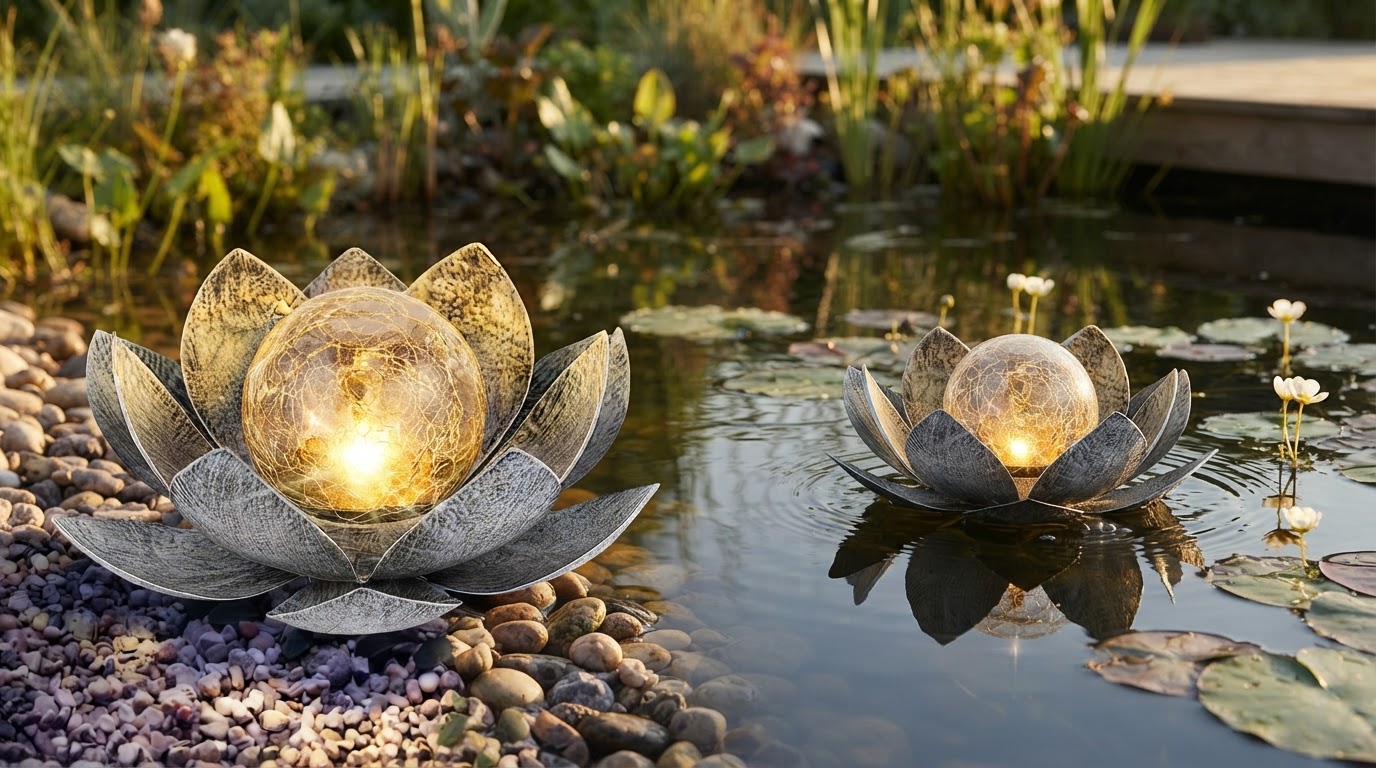
Solar Lotus Light Evaluation for Floating Pond Use
 Maya ChenContributing Editor
August 7, 2026 — The market for floating aquatic lighting is shifting as consumers move away from static fixtures toward the versatile Solar Lotus Light. While many homeowners assume that any outdoor light can survive a season on the water, the reality of moisture ingress and UV degradation often tells a different story.
Conventional wisdom suggests that standard outdoor solar lotus light stakes are interchangeable with floating models, but the engineering requirements for a sustainable solar powered pond lily light are significantly more demanding. According to data tracked by the International Electrotechnical Commission, the difference between a light that resists rain and one that survives constant surface contact comes down to the integrity of the seals and the buoyancy of the housing. Without a dedicated IP rating for immersion, most decorative lights fail within a single season of use.
The 4 Durability Factors
Photo by joao Guerreiro on Pexels
Here's the part nobody talks about: the efficiency of a solar powered pond lily light is entirely dependent on the angle of the panel relative to the sun, which is constantly shifting in a pond environment. The Solar Lotus Light addresses this by utilizing a high-efficiency monocrystalline solar panel integrated into the flower's center, allowing for a 360-degree exposure profile. Run the math: a standard 600mAh Ni-MH battery requires at least six hours of direct sunlight to provide the eight to ten hours of illumination expected for lotus flower landscape lighting. If the panel is obscured by the petals or tilted by water movement, that runtime drops by 40%. The current model is engineered with a balanced ballast to ensure the lily stays upright even during moderate wind, maintaining a consistent charge cycle. This is a critical distinction from cheaper alternatives that often capsize, leading to battery corrosion. When considering waterproof solar garden ornaments, the focus must remain on the seal quality. The Solar Lotus Light is built to withstand the humidity levels found in active water features, which is a necessary step up from basic solar powered lotus garden stakes. While some users on Reddit discuss using these lights in pools, the chlorine levels can degrade the synthetic fabric of the petals faster than freshwater pond environments. Choosing a floating solar lotus for pond use requires verifying that the internal electronics are vacuum-sealed against the constant rising damp of the water surface.
Expert tip: To maximize the lifespan of your solar powered pond lily light, wipe the solar cell with a damp cloth weekly to remove mineral deposits from evaporated pond water, which can block up to 30% of incoming UV rays.
Selecting the right solar lotus light involves looking past the aesthetic appeal and focusing on the hardware that keeps the unit afloat and functional. I'll change my mind when a cheaper alternative can match the cycle life of a high-density lithium-ion cell in a high-humidity environment.