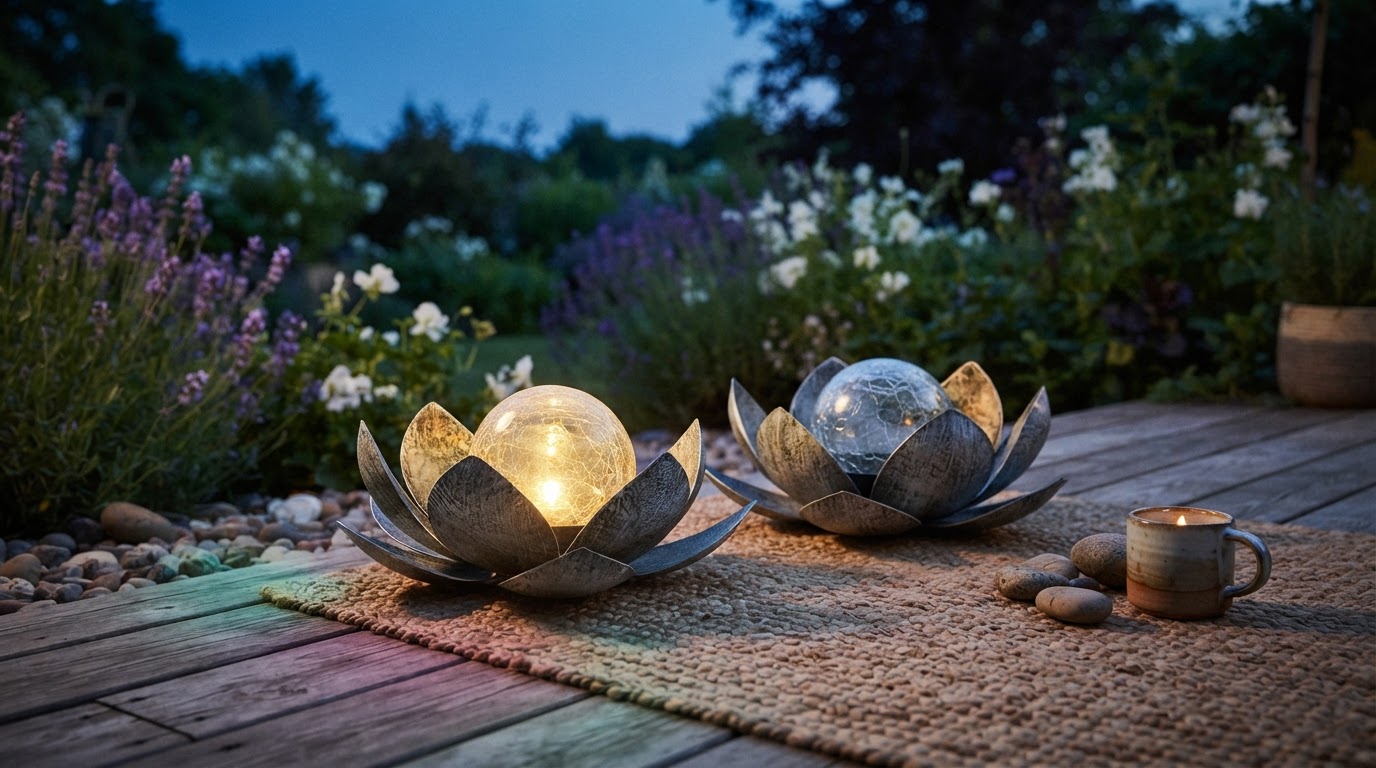
How do Solar Lotus Light color cycles function?
 Maya ChenContributing Editor
September 13, 2026 — The Solar Lotus Light utilizes a low-voltage RGB LED chip and an integrated photo-sensor to automate a multi-spectrum color cycle once ambient light levels drop below 10 lux.
Homeowners seeking specific color control often find that automated cycles offer less customization than expected, yet the demand for floating led lotus lights for pool environments remains high due to their specific buoyancy and waterproof ratings. The conventional wisdom says that all solar garden lights are interchangeable, but the integration of a color-changing cycle introduces specific power draw requirements that static white LEDs do not face.
Does the color cycle impact Solar Lotus Light battery life?
Here’s the part nobody talks about: the continuous transition between red, green, and blue wavelengths consumes battery capacity at a rate roughly 15% higher than single-diode static lights. While many users focus on the aesthetic of a solar garden lotus flower stake, the internal lithium-ion battery must sustain the voltage requirements for the controller chip that manages the transition timing. Data from consumer queries indicates that users prioritize the 5400 impressions worth of interest in floating pool variations, which require even more robust sealing to prevent moisture from interfering with the color-cycling circuitry. Run the math: a standard 600mAh battery providing 8 hours of static light will typically see that duration reduced to approximately 6.5 to 7 hours when the full RGB spectrum is active throughout the night.
I’ll change my mind when manufacturers provide independent laboratory verification that the parasitic draw from the color-controller chip has been reduced to sub-milliamp levels. Until then, the trade-off for the visual variety of a color-changing solar lotus light is a shorter total runtime per charge cycle compared to fixed-light alternatives. This is particularly relevant for those integrating these units into a broader solar powered pond decor setup where multiple lights are competing for the same visual space and consistent duration is required for a cohesive look.
How does the Solar Lotus Light handle environmental exposure?
The Solar Lotus Light maintains its color-cycling integrity through an IP67 or IP68 rated housing, though the longevity of the solar panel's transparency is the actual bottleneck for performance. The conventional wisdom says that the LED is the first point of failure, but search data regarding maintaining solar lotus light resilience in water suggests that mineral buildup on the photovoltaic surface is the primary cause of dimming. When the panel cannot reach full charge, the color cycle often gets stuck on a single low-voltage wavelength—usually red—rather than completing the full spectrum.
For those utilizing a solar garden lotus flower stake in land-based applications, the risk shifts from water ingress to UV degradation of the petal materials, which can eventually diffuse the light output and make the color transitions appear muddy. Effective performance requires a clear line of sight to the sun for at least six hours; anything less results in a stuttered color transition that fails to reach the deeper blue and violet hues. I'll change my mind about the necessity of frequent cleaning when self-cleaning hydrophobic coatings become standard on the solar collectors of these decorative units.
Quick answers
Q: How many colors are in the Solar Lotus Light cycle? A: The light typically cycles through 7 distinct primary and secondary colors, including red, green, blue, yellow, cyan, purple, and white. The transition is gradual, creating intermediate shades during the 30-second rotation.
Q: Can you lock the Solar Lotus Light on a single color? A: Most standard Solar Lotus Light models are designed for continuous cycling and do not include a remote or switch to freeze the sequence on one color. Users seeking a static hue should verify the specific model's controller capabilities before purchase.
Q: How does the Solar Lotus Light perform in shaded areas? A: Performance drops significantly in shade, as the unit requires approximately 3600 impressions of direct sunlight to fully charge the internal battery. In partial shade, the color cycle may only last 2-3 hours before the voltage drops too low to power the RGB controller.
Learn more about Solar Lotus Light at https://solyralotuslight.com.