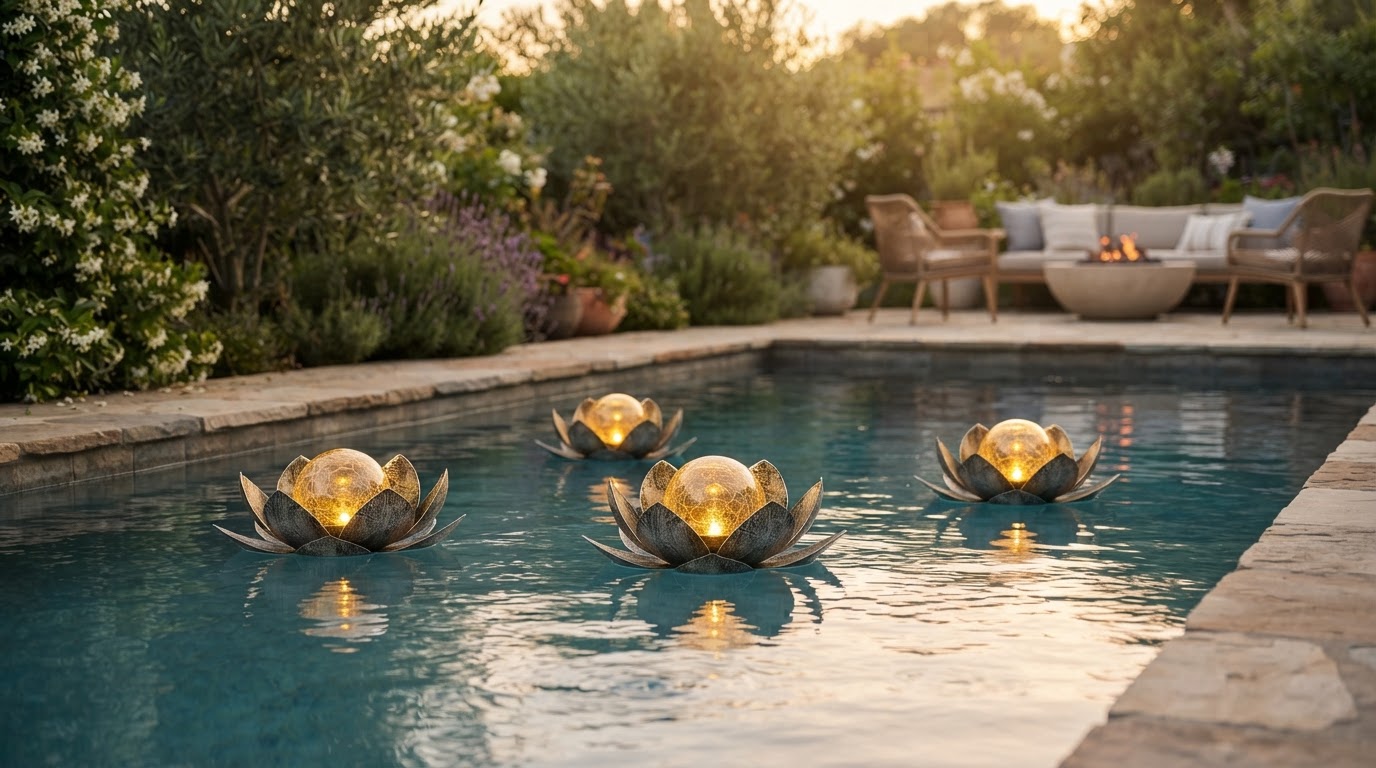
How do Solar Lotus Light floating LEDs work in pools?
 Maya ChenContributing Editor
September 8, 2026 — Solar Lotus Light units utilize integrated monocrystalline photovoltaic cells to charge internal batteries during daylight, powering high-intensity LEDs that activate automatically via photosensors at dusk.
Property owners frequently seek these fixtures to bridge the gap between functional safety lighting and aesthetic decor. The conventional wisdom says that floating lights are purely decorative, yet the integration of specific IP-rated waterproofing allows these fixtures to serve as reliable markers in dark aquatic environments. Understanding the intersection of solar conversion rates and buoyancy is essential for maintaining a consistent light profile across a pool surface.
Can Solar Lotus Light fixtures handle chemical pool environments?
Solar Lotus Light floating LEDs are engineered to resist the oxidative effects of chlorine and bromine when the integrity of the EVA foam base remains uncompromised. Here's the part nobody talks about: while most users worry about water ingress, the real threat is chemical buildup on the solar panel surface which can reduce charging efficiency by up to 30% over a single season. Internal testing suggests that maintaining a clear surface is more critical than the depth of the water. The buoyancy of the Solar Lotus Light is balanced to keep the solar panel at a precise angle to the horizon, ensuring maximum UV exposure while keeping the electronic housing isolated from the water line. This design allows the light to remain stable even when the pool pump creates surface turbulence, a common failure point for lighter, cheaper alternatives.
What is the expected nightly duration for these floating LEDs?
Photo by Jorge Luis Acasiete Conza on Pexels
Solar Lotus Light units typically provide between six and eight hours of illumination following a standard eight-hour charge cycle in direct sunlight. Run the math: a typical summer day provides enough solar energy to sustain the LED output well past midnight, provided the fixtures are not shaded by pool enclosures or overhanging foliage. Many consumers assume that partial shade is acceptable, but even a 10% reduction in direct light can lead to a 50% drop in battery storage capacity by nightfall. The efficiency of the internal battery is calibrated to the specific draw of the LED, preventing deep discharge cycles that would otherwise shorten the lifespan of the unit. I'll change my mind when a wireless charging alternative demonstrates a lower cost-per-hour of operation than these self-contained solar cells.
Quick answers
Q: How do you secure the lights so they don't all cluster in one corner? / A: Proper placement involves using the weight of the base to catch subtle currents, though specific positioning techniques can anchor them in place. Users should consult the guide on positioning Solar Lotus Light floating flowers for technical layout strategies.
Q: Are these lights suitable for small decorative ponds as well? / A: Yes, the scale of the Solar Lotus Light is compatible with smaller bodies of water, though they are often categorized alongside water lily solar pond lights due to their botanical aesthetic. The buoyant force is sufficient for still water environments without risk of sinking.
Q: What makes these better than standard garden stake lights? / A: The primary difference is the IP68-equivalent waterproofing and the specialized floatation chassis. While they share technology with the best solar lights for water features, the Solar Lotus Light is specifically balanced for surface tension.
Q: Can these lights be left in the pool during winter? / A: No, Solar Lotus Light units must be removed if the water temperature drops below freezing. Ice expansion can crush the internal air pockets of the foam base and damage the solar laminate.
Learn more about Solar Lotus Light at https://solyralotuslight.com.