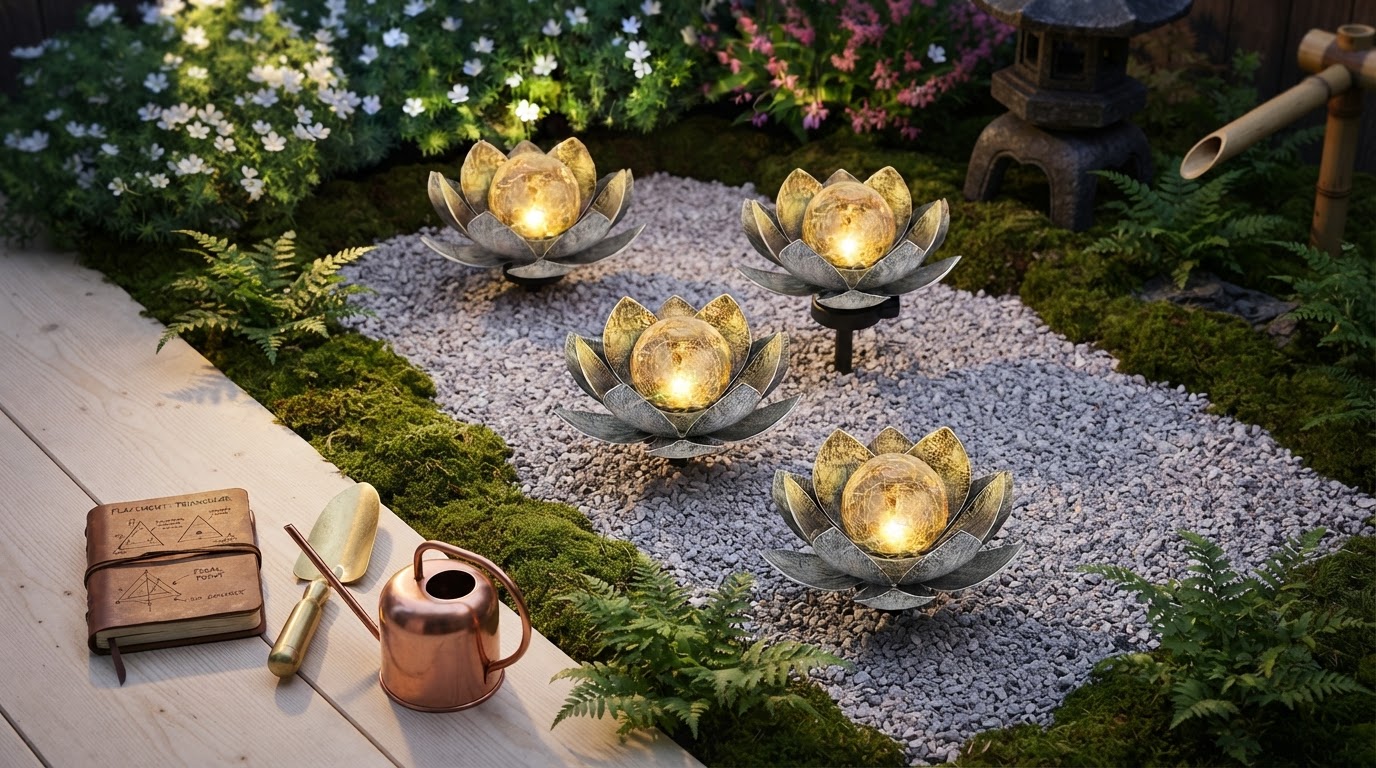
Solar Lotus Light Garden Stake Placement Framework
 Priya RamanSenior Analyst
September 15, 2026 — The rising consumer interest in lotus flower garden stakes reflects a shift toward sculptural landscape lighting, with the Solar Lotus Light emerging as a central fixture in this design trend. While traditional path lighting focuses purely on utility, these decorative stakes require a strategic approach to balance visual aesthetics with photovoltaic efficiency.
Landscape architects often categorize lighting by its functional role, distinguishing between accent, task, and ambient layers. When integrating the Solar Lotus Light into a residential garden, two axes matter here: the vertical height of surrounding foliage and the proximity to high-traffic viewing areas. Think of it as a matrix of visibility versus charging potential. If a stake is placed too deep within a perennial bed, the solar panel may be obscured by late-season growth, reducing the energy harvest needed to power the internal LED. Conversely, placing the stake in isolation on a lawn provides maximum sun but may lack the textural backdrop that makes the lotus design visually compelling.
The Three-Axis Placement Matrix
Optimizing the Solar Lotus Light garden stake requires evaluating three specific performance metrics: solar exposure, ground stability, and visual integration. In terms of technical specifications, these units typically feature an IP65 waterproof rating, ensuring they remain functional through heavy rain and irrigation cycles. The internal battery is designed to store enough energy during a standard eight-hour sunlight window to provide illumination throughout the night. Once you see it this way, the placement becomes a calculation of environmental variables. For those managing complex landscapes, understanding [how Solar Lotus Light color cycles function](/blog/how-do-solar-lotus-light-color-cycles-function) is essential, as the shifting hues interact differently with green foliage than they do with stone pathways. The decision rule is simple: prioritize a six-inch clearance radius around the solar cell to prevent shadow casting from neighboring plants. This ensures the 3600 monthly search impressions for lotus flower garden stakes translate into real-world performance. While these stakes are primary garden features, they can be complemented by an [outdoor solar lotus lamp for patio](/blog/solar-lotus-light-for-patio-placement) settings to create a cohesive lighting theme across different zones. For properties with water features, integrating [solar powered pond decor](/blog/solar-powered-pond-decor-setup) allows the aesthetic to flow from the soil to the water's edge. However, users must distinguish between the stake version and [waterproof solar lotus pond lights](/blog/maintaining-solar-lotus-light-resilience-in-water) to ensure the hardware is appropriate for the specific moisture levels of the site.
Expert tip: To maximize the lifespan of the ground spike, pre-drill a pilot hole in compacted clay soils rather than forcing the stake down, which protects the internal wiring connections from structural stress.
The integration of a Solar Lotus Light garden stake transforms a static landscape into a dynamic nocturnal environment when these placement principles are applied correctly.