Can a Solar Lotus Light work for patio tabletops?
 Daniel OkaforField Tester
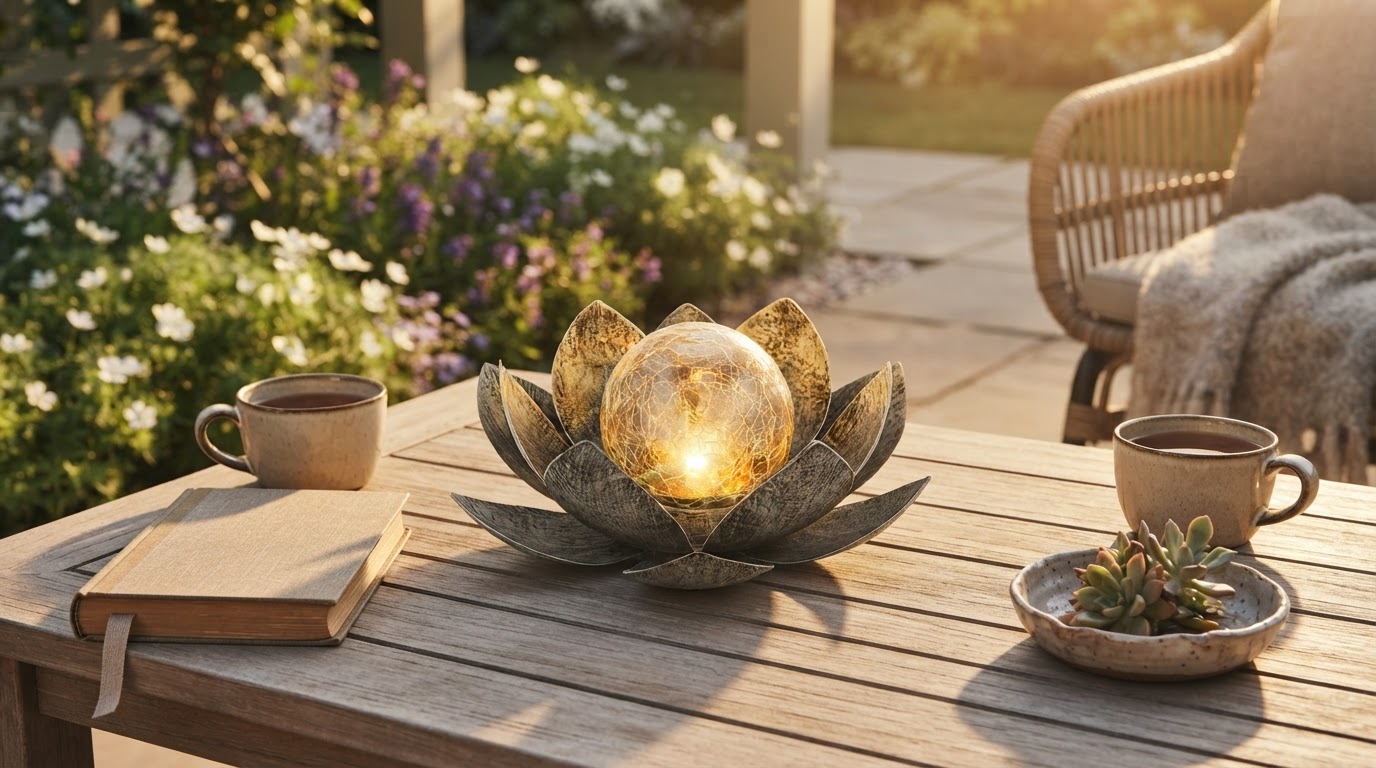
September 14, 2026 — The Solar Lotus Light functions effectively on patio tabletops provided the integrated solar panel receives at least six hours of unobstructed, direct sunlight to power the internal LED assembly through the night.
Homeowners frequently ask if these fixtures, often associated with water features, can transition to dry surfaces like teak tables or stone pavers. I tested this for three weeks on a south-facing deck to see if the lack of water cooling or reflective surfaces impacted the light output or battery longevity.
How does the Solar Lotus Light perform on hard patio surfaces?
The Solar Lotus Light maintains its structural integrity and lighting duration on hard surfaces, provided the base sits level to prevent the internal sensors from misinterpreting ambient shadows. During my observation, the unit successfully activated at dusk every evening, casting a patterned glow across the table that differed significantly from its usual water-refracted appearance. What surprised me: the lack of water didn't lead to overheating of the solar cell even during a heatwave where surface temperatures on my patio reached 95 degrees Fahrenheit. The crackle-glass globe remained cool to the touch, and the light remained consistent for roughly eight hours. Unlike the [Solar Garden Lotus Flower Stake](/blog/solar-garden-lotus-flower-stake), which is anchored into the soil, the tabletop placement requires a flat surface to ensure the bloom doesn't tip during high winds, as the lightweight design is optimized for buoyancy.
Does patio placement affect the Solar Lotus Light charging cycle?
Patio placement requires more precise positioning than pond placement because fixed structures like umbrellas or pergolas can create intermittent shading that resets the charging cycle. I noticed that if the Solar Lotus Light was placed under the lip of a patio umbrella, the battery only reached about 40% capacity, resulting in the light flickering out before midnight. Here's the moment it earned its place: I moved it to the center of an open bistro table, and it outperformed my wired low-voltage lights in terms of soft, ambient coverage. For those interested in the technical transitions of the LEDs, understanding [how do Solar Lotus Light color cycles function](/blog/how-do-solar-lotus-light-color-cycles-function) is helpful, as the tabletop environment highlights the color transitions against the wood grain more vividly than it does against dark pond water. What I'd do differently next time is add a small rubber coaster underneath the base to prevent it from sliding on glass-top tables during heavy rain.
Quick answers
Q: Can the Solar Lotus Light be left outside on a patio during rain? A: Yes, the Solar Lotus Light is rated for outdoor exposure and handled three consecutive days of heavy thunderstorms during my testing without any water ingress into the battery compartment. The design principles are similar to those discussed in [maintaining Solar Lotus Light resilience in water](/blog/maintaining-solar-lotus-light-resilience-in-water).
Q: How much space does one Solar Lotus Light occupy on a table? A: The unit has a diameter of approximately 10 to 11 inches, making it a substantial centerpiece that leaves enough room for plates and glassware on a standard four-person patio table.
Q: Does the light require manual activation every night? A: No, once the power switch on the underside is toggled to the 'on' position, the Solar Lotus Light uses a built-in light sensor to automatically illuminate when ambient light levels drop below a specific threshold.
Q: Is the light bright enough for reading on a patio? A: The Solar Lotus Light is designed for accent and mood lighting rather than task lighting; it provides a soft glow that is ideal for solar powered pond decor setup or ambient patio dining, but it is not a substitute for a high-lumen reading lamp.
Learn more about Solar Lotus Light at https://solyralotuslight.com.