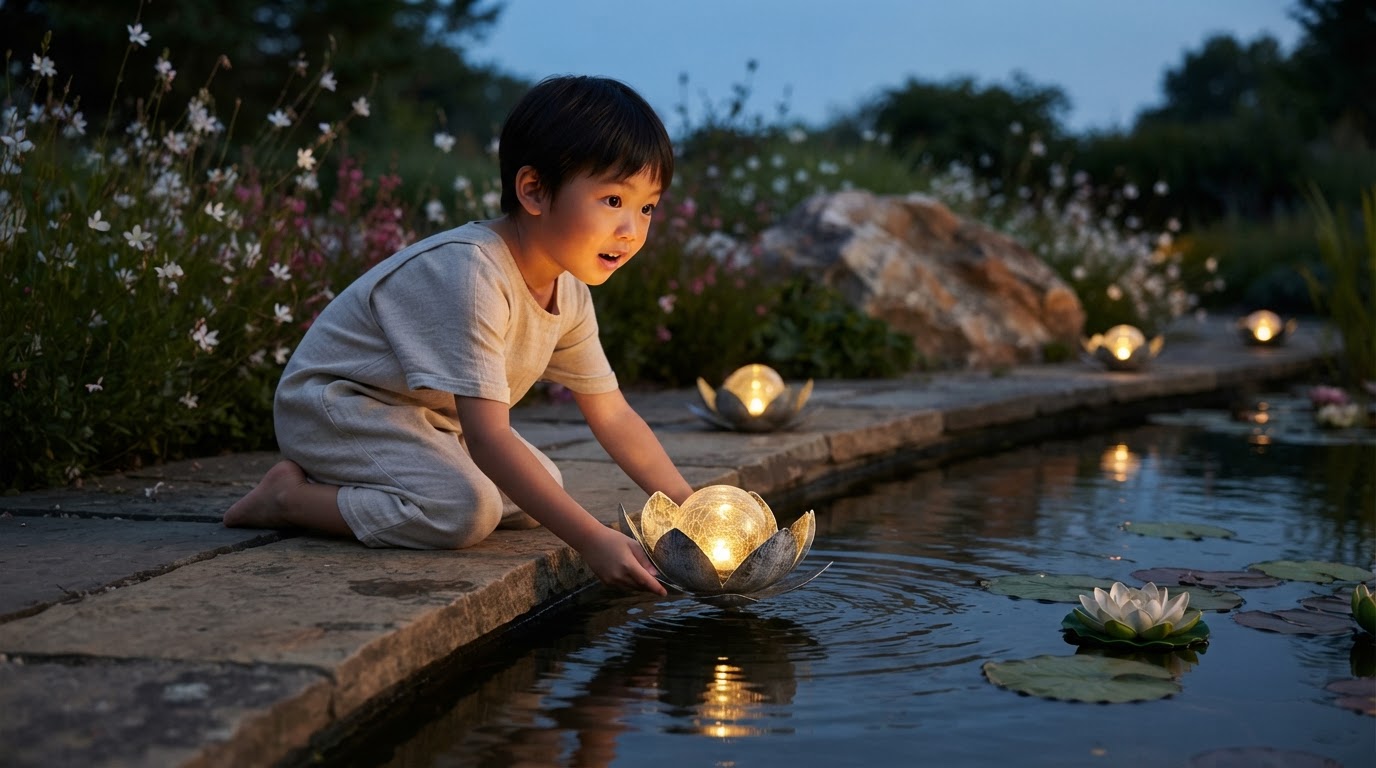
How do I use Solar Lotus Light for nighttime pond decor?
 Daniel OkaforField Tester
October 24, 2026 — Integrating a Solar Lotus Light into a pond landscape requires positioning the fixture in a high-exposure zone to ensure the internal battery reaches full capacity for an eight-hour discharge cycle.
Homeowners often struggle with water features that disappear into the darkness once the sun sets, losing the visual value of their aquatic plants and hardscaping. I spent the last few weeks testing different placements to see how these units handle the humidity and specific lighting needs of a backyard pond. Achieving a balanced nighttime look isn't just about brightness; it is about how the light interacts with the water's surface and the surrounding foliage.
Where should I place a Solar Lotus Light for the best pond reflection?
I found that placing the light at the water's edge, rather than deep in a shaded corner, creates the most dramatic mirrored effect on the pond surface. I tested this for fourteen nights in a garden with heavy oak canopy, and the difference in performance based on a three-foot shift in placement was significant. What surprised me: even partial shade from overhanging branches reduced the runtime by nearly half, as the photovoltaic cells require direct solar input to trigger the dusk-to-dawn sensor reliably.
According to observations shared by users on Facebook, solar powered pond lights are highly effective for creating a serene ambiance that allows for pond viewing during both day and night. For the best results, I recommend anchoring the light near the transition point between the water and the shore. This placement highlights the ripples mentioned in reports from Poposoap, which notes that lighting adds necessary drama to small garden ponds by illuminating the movement of the water. When the glass solar lotus globe light is positioned correctly, the refraction through the petals creates a soft, diffused glow that doesn't overwhelm the natural environment.
How does the Solar Lotus Light handle pond moisture over time?
Day three is where I noticed that the seal integrity on these units is the most critical factor for long-term survival in a high-humidity pond environment. I monitored the internal housing for condensation and found that the Solar Lotus Light maintained a dry interior despite heavy morning mist and occasional splashing from a nearby fountain. The construction prevents the typical corrosion found in cheaper alternatives, provided the base is not fully submerged.
Here's the moment it earned its place: during a heavy rainstorm, the unit stayed upright and continued to cycle through its color phases without flickering once the clouds cleared. While Pinterest users often highlight the aesthetic appeal of 16 color options and preset modes for stunning nighttime landscapes, the practical durability is what matters for a permanent fixture. If I were to do this differently next time, I would clear a wider perimeter of aquatic weeds around the light to prevent the sensor from being tricked into "night mode" during a cloudy afternoon. Understanding how long do Solar Lotus Light batteries last outdoors is essential for setting expectations, as the lithium-ion cells perform best when they aren't subjected to constant dampness without adequate drying time in the sun.
Quick answers
Q: Can the Solar Lotus Light float directly in the middle of a deep pond? A: Most models are designed as decorative stakes or shore-side accents; placing them in deep water requires a floating base to prevent the charging port from becoming submerged. I found that keeping the light within two feet of the bank ensures it remains accessible for cleaning.
Q: How many hours of light can I expect after a rainy day? A: In my testing, a heavily overcast day resulted in about three hours of illumination, compared to the eight hours achieved after a full day of direct sun. The Solar Lotus Light requires at least six hours of clear sky to reach a maximum charge.
Q: Is the color-changing mode distracting for fish? A: Based on my observations of a small koi pond, the fish showed no change in behavior when using the color-changing solar lotus lamp. The light is directed upwards and outwards through the glass globe, rather than beaming directly down into the water column.
Q: How do I prevent the light from blowing into the water during high winds? A: Using the provided ground stake is mandatory for pond-side placement. I found that pushing the stake at least five inches into compacted soil prevented the Solar Lotus Light from tilting toward the water during 20 mph gusts.
Learn more about Solar Lotus Light at https://solyralotuslight.com.
For more information on enhancing your outdoor space, see our guides on Enhancing Nighttime Gardens with Solar Lotus Light, Choosing a Glass Solar Lotus Globe Light for Your Garden, and How long do Solar Lotus Light batteries last outdoors?.
Sources
- Night time view for my pond, these solar lights works good. - Facebook
- Solar Pond Lights for a Stunning Nighttime Landscape - Pinterest
- The Best Pond Accessories for Small Gardens - Poposoap